A Beginner's Guide to Using GPS Collars for Upland Sheep and Cattle Grazing Management
Fencing a hill is slow, expensive work, and the ground you most want to protect — wet flushes, a recovering bog, heather coming back after burning, the edge of a young woodland — is usually the ground that is hardest to fence. GPS collars offer a different route. Fit them to a batch of ewes or a group of suckler cows, draw your boundaries on a screen, and you can move grazing pressure around a holding without a single new post. It is not magic, and it is not maintenance-free, but on many upland units it has become a workable alternative to guesswork and broken wire.
Tracking and virtual fencing are two different jobs
It helps to separate the two things a collar can do, because they solve different problems.
A tracking collar simply records where an animal is and sends that position back to you — by mobile network, by a local radio gateway on the farm, or by satellite where there is no coverage at all. You get a map of where the flock or herd actually went, how long they lingered on a wet flush, and which corners of a 200-acre allotment never get touched. That information alone changes how you plan grazing.
A virtual fencing collar adds a boundary. When the animal walks towards a line you drew on the map, the collar plays a warning tone. If it keeps going, it delivers a short pulse. Most animals learn within a few encounters that the tone means "turn around", and after that the tone alone does the work. You can use this to keep stock in a paddock, to keep them out of a sensitive area, or both.
Some systems need a live signal to change a boundary; others hold the map on the collar itself, so the animal is managed correctly even when the phone signal drops out. If your ground is a signal blackspot, that detail matters more than almost anything else on the spec sheet.
Why upland grazing suits it — and where it struggles
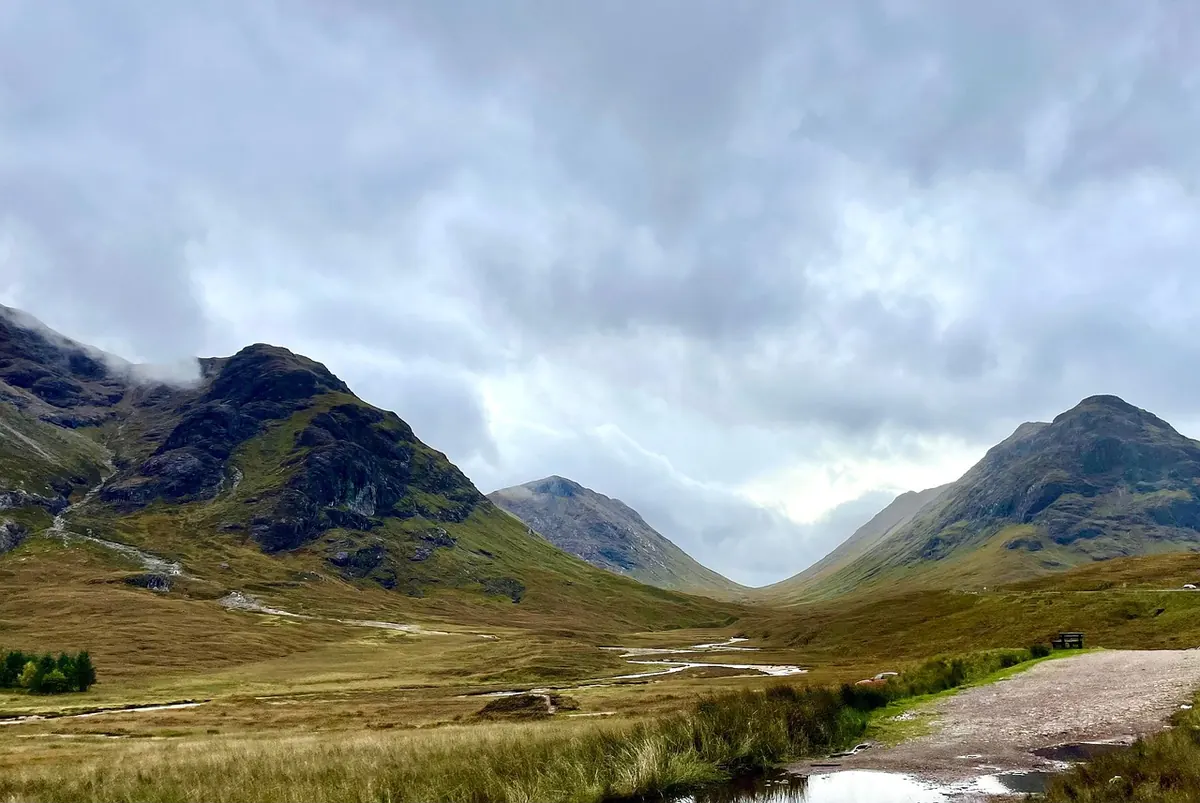
The uplands are, in some ways, an obvious fit. Fields are large, fences are old, and conservation grazing agreements often ask for precise timing: graze this rush pasture hard in early summer, then leave it, keep cattle off the sphagnum, put light pressure on the Molinia. Virtual boundaries can be redrawn in minutes, so a plan that would once have required three new fence lines becomes a set of polygons on a laptop.
The limitations are real too. Deep heather and steep gullies hide collars and make them harder to find. Long winter nights and heavy cloud reduce solar charging. Animals rub collars on rocks and gateposts. And a virtual boundary is not a physical barrier: if there is a road, a railway, a cliff or a neighbour's crop on the other side, do not rely on a tone and a pulse to hold that line. Keep real fencing on the edges where failure is not an option.
What to ask before you buy
Prices and specifications change quickly, so treat any quote as a starting point and ask hard questions:
- Weight and fit. How heavy is the collar for a 60 kg ewe, and how does the manufacturer recommend fitting it so it neither rubs nor slips?
- Battery life. What is realistic in December, not July? Is there a solar panel, and does it work in a Scottish winter?
- Connectivity. Does the system need mobile coverage, a farm gateway, or satellite? What happens when it loses contact?
- Boundary changes. Can you redraw a line from the kitchen table, or does it need a farm visit?
- Welfare design. Is the warning tone loud enough for a windy hillside but not so loud it panics the group?
- Data ownership. Who owns the location records, and can you export them as a simple CSV or KML file?
- Repair and support. How fast can a replacement collar reach you in the middle of a grazing season?
- Legal position. Rules on virtual fencing vary between countries and are still evolving. Check the current requirements with your national agricultural regulator or a qualified farm adviser before you commit.
Setting up your first virtual paddock
- Walk the ground first, with the map on your phone. Note where water is, where the ground is poached, and where animals naturally drift.
- Draw the boundary generously. Leave a buffer of several metres between the line and anything you want protected, so animals turn before they reach it.
- Start small. One paddock of 20 to 30 animals teaches you more in a fortnight than a whole-farm rollout teaches you in a year.
- Train the group in a familiar field with a visible feed trough, and stand back to watch.
- Keep a physical fence on one side for the first rotation, so you have a fallback if something goes wrong.
- Check the group at least twice a day for the first week. Look at the collars, not just the app.
Training livestock without drama
Sheep and cattle both learn the system, but they learn differently. Cattle tend to approach a boundary head-on and respond well to a clear, consistent tone. Sheep move in a flock and often learn from each other, which means one confident ewe can carry a whole batch — and one nervous batch can take an extra day or two.
Practical points that experienced users repeat: train in calm weather and daylight; never introduce a boundary next to a hazard such as a ditch, a gate that swings, or a bull pen; keep lambs and calves with their mothers so nobody is separated by an invisible line; and watch for the individual that simply will not accept a collar. Have a plan for her — a smaller group, a different field, or no collar at all.
The data is the quiet part of the payback
Tracking records are where the system often earns its keep, even before virtual boundaries come into it. After a few weeks you can see which areas are being hammered and which are being ignored, and adjust stocking or shepherding accordingly. You can time rest periods more precisely on a rush pasture or a heather block, and you have a dated record of where stock grazed if an agri-environment scheme asks for evidence.
Movement patterns also flag things worth a look: an animal that stops moving with the group, or one that stays in the same corner for days, is often lame, cast, or unwell. The collar will not diagnose anything, but it will send you to check.
A sensible way to start
Pick one field, one group of animals and one season. Fit collars, keep your existing fences, and set yourself a single question to answer — did the cattle stay off the bog, or did the ewes use the far side of the allotment more evenly than usual? Write down what you observe, including the annoyances: flat batteries, a collar lost in the rushes, a boundary that needed redrawing twice.
Talk to your vet about welfare and fitting, and to a farm adviser about how the system fits your scheme agreements. If the first season works, expand slowly, and keep at least one physical fence on the boundary you would least like to see breached.
Photo: congerdesign / Pixabay